


Categories: Other Meditation Teachings
May the blessings of the Triple Gem be with you all!
Welcome. This exploration is for those who are practically investigating the spiritual life, and also for those who may be new to these ideas. The topic we will delve into is the relationship between inner knowing and external knowledge, often framed as a comparison between Buddhism and science.
To truly grasp this, it is helpful to approach this teaching with an open and neutral mind, a state we call Upekkha, or equanimity. I invite you to read through to the very end before forming conclusions, and then to reflect on how these ideas might apply to your own life. Let us begin this journey of understanding together.
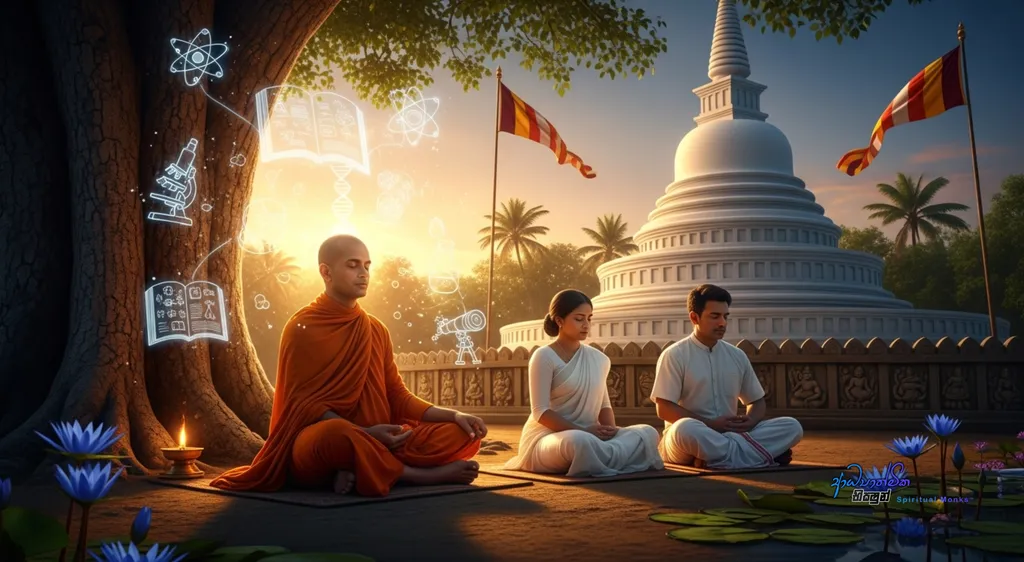
A Tale of Two Paths: Introducing Person A and Person B
To explore this, let us consider a parable. Imagine two people, Person A and Person B. They are the same age, of the same status, and for this example, let’s say they are identical in height, weight, and build. As they enter their youth, around the age of 18 to 25, their paths diverge based on their differing ideas and inclinations. We will follow their two distinct journeys to understand two fundamentally different approaches to life and knowledge.
Path A: The Journey of Internal Spiritual Development
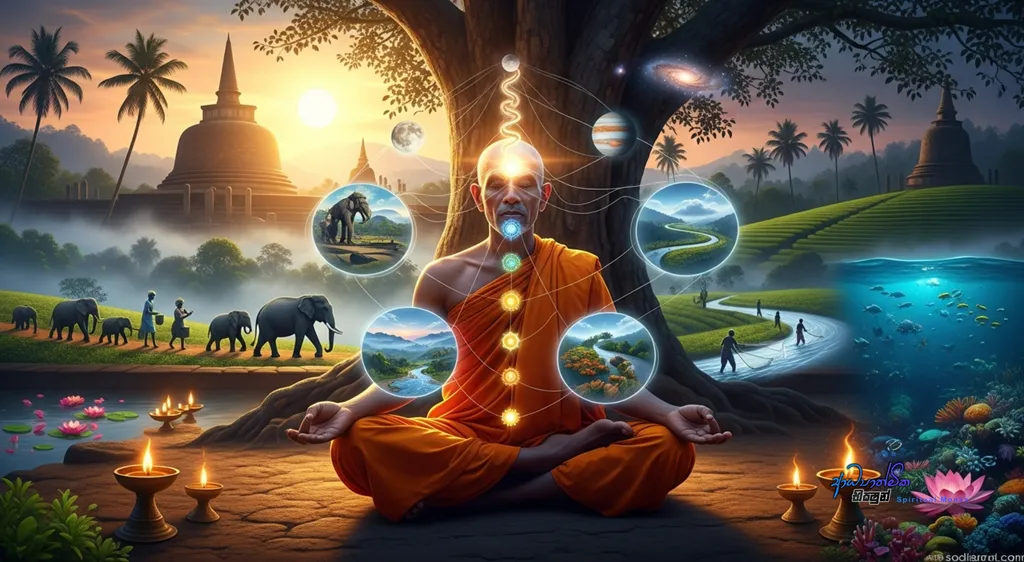
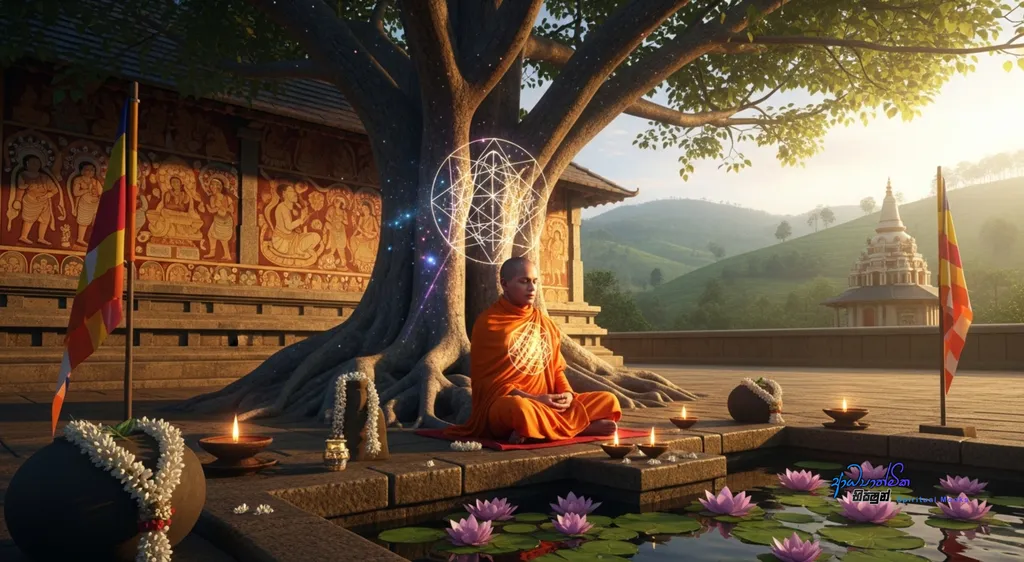
Person A, influenced by some factor in their environment, feels a powerful urge to understand their own mind, or Citta. They begin a journey of practical spiritual development. This starts with a calming meditation practice, known as Samatha Bhavana. As they persist, their practice deepens. Over time, their inner vision, sometimes called the ‘Third Eye’ (Theveni Esa), begins to awaken. They gain various spiritual abilities and eventually master the eight stages of deep meditative absorption, the Ashta Samapatti or Jhanas.
With this profound mental power, Person A explores the nature of reality directly. They investigate the formation of the world, the origin of beings, the evolution of humanity, and the causes of its eventual destruction. They turn their mind’s eye to other celestial bodies like the sun, Jupiter, and the moon, as well as distant stars and galaxies. Information comes to them swiftly and clearly, not through instruments, but through the refined power of their own mind.
This person, having awakened their innate potential,perhaps through cultivating what is known as Kundalini energy and achieving the five psychic powers (Pañca Abhiññā),can perceive the existence of all things: the life in trees and plants, animals, rivers, and even the creatures within the deepest oceans. This is the path of direct knowing, where the mind itself is the ultimate tool of discovery.
The Buddha, as well as other great beings like Solitary Buddhas (Pacceka Buddhas), Arahants (fully liberated beings), and ancient Sages (Rishis), are exemplars of this profound level of spiritual development.
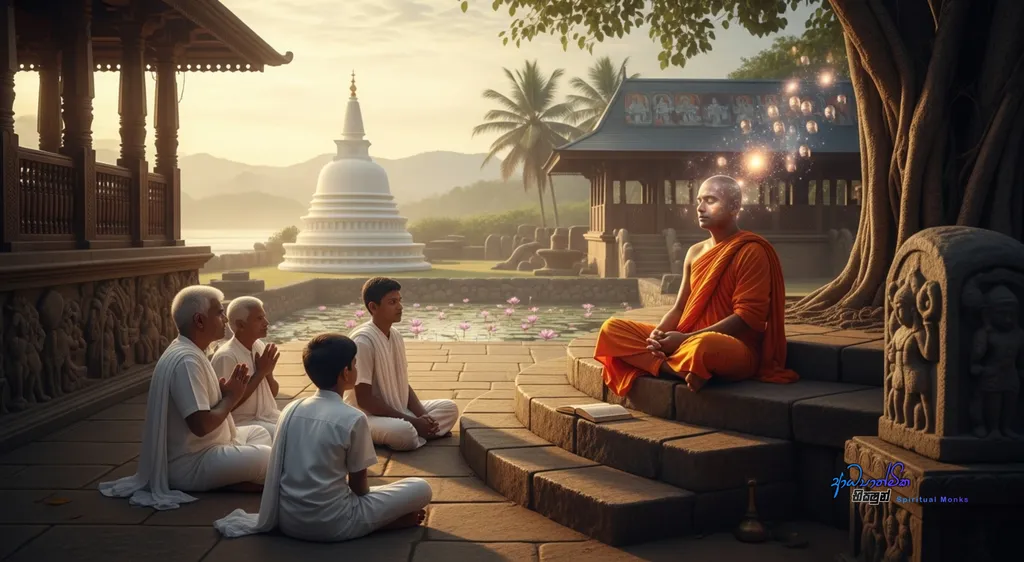
The Destination of Inner Knowing: Liberation (Nibbana)
Having explored the cosmos and understood the fabric of existence through their inner vision, what is left for Person A to do? They have already abandoned the world of sensual pleasure (the Kama Loka), as it no longer holds any interest for them. They have investigated nature and the universe not through books or machines, but through their own mind. Imagine the profound equanimity and impartiality such a person would possess.
Having seen the endless cycle of birth, death, and rebirth, what we call Samsara,by looking into past and future lives, they realize there is nothing new to discover within this cycle. The only logical next step is to transcend this process of existence entirely. The ultimate goal becomes the cessation of this cyclical wandering. This is the realization of Nibbana (or Nirvana), the ultimate liberation from all suffering and becoming.
Once this is achieved, their sole purpose is to teach others the way. If asked about the cosmos, nature, or the oceans, they can provide answers. However, they do not dwell on such topics, for they have seen it all. Their priority is to guide those who are ready to end their own journey through Samsara and find true, lasting peace.
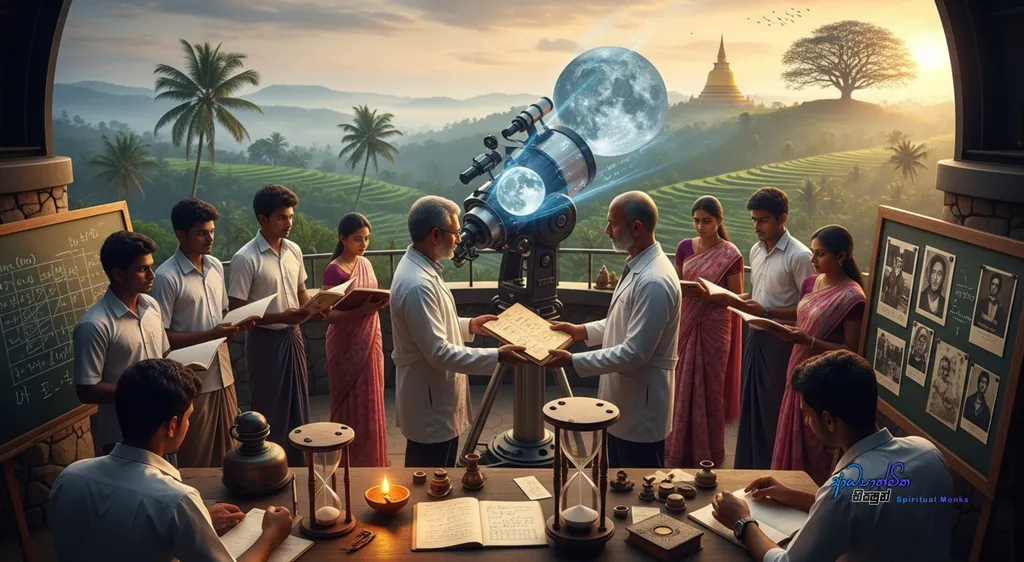
Path B: The Journey of External Scientific Discovery
Now let’s turn to Person B. They follow a conventional path of external learning. They complete their schooling, attend university, and earn the highest degrees, perhaps a PhD in a scientific field. They join a research institution dedicated to studying the cosmos, nature, or other planets. Their method is to invent and use external instruments, like advanced telescopes, to conduct their investigations.
This process is slow and laborious. An experiment might take five, ten, or even more years. Unlike Person A, who might realize liberation by age 30, Person B could spend decades on a single project, like studying the moon, and still only scratch the surface. They gather followers or students who continue their work after them.
However, life is uncertain. This is the law of impermanence, or Anicca. Person B could meet an untimely end through an accident or illness, a result of their own past intentional actions, or Kamma. Their research is left unfinished, passed on to their students who might take another 20, 30, or 50 years to make progress. This is the way of scientific advancement, it is incremental, external, and perpetually incomplete.
Inward vs. Outward: A Reflection on How We Use the Mind
So, we have two individuals, A and B. It is crucial to remember that both possess the same fundamental tool: a mind (Citta). The difference lies in how they use it.
- Person A focused their mind inwardly. They did not search for external tools but cultivated their own consciousness to become the instrument of knowing. In a short time, they understood everything, realized Nibbana, and taught the path to liberation.
- Person B focused their mind outwardly. They used their intelligence to invent external tools to investigate the external world.
Here, you have the right to decide for yourself: Who is more developed? Who has achieved a more advanced state of mind? This example, which mirrors the journey of the Buddha 2500 years ago, is offered for your own reflection.
Universal Harmony: Aligning with Nature Through the Mind
There is a universal law at play. The universe, or nature (Svabhāva), assists the one whose spiritual development poses no harm to it. When the mind is purified and developed internally, one aligns with the cosmos. True harmony is not achieved by developing external tools to conquer or analyze nature, but by cultivating the mind within it. One who understands this is helped by the universe to see and comprehend all things.
Conversely, developing the mind solely to create external technologies does not lead to this same alignment. We might gain knowledge, but we do not achieve harmony. The path of inner spiritual development is the only way to become one with the natural and universal order.
Spiritual Opportunity in the Modern World
This teaching is especially relevant today. In many developed countries, where basic needs are met and governments are stable, people have the luxury of time and mental space. They are not consumed by daily survival. It is often these individuals who have the freedom to explore spiritual questions and are drawn to teachings like this. Their time is their own.
In contrast, in places facing economic hardship, people are often trapped in a cycle of worry: paying off loans, finding their next meal, affording school fees for their children. They are entangled in a web of problems, leaving little to no time to contemplate the deeper aspects of spiritual development. In the Buddhist tradition, this force of distraction and entanglement is personified as Māra, the tempter, who obstructs the path to freedom.
Just as Person A, having seen everything, finds nothing left to do but seek liberation, we too can use our free moments to turn inward. By reflecting on these two paths, we can begin our own journey of spiritual development, no matter our external circumstances.
Conclusion: Which Path Will You Choose?
So, reflect on this. If you were Person A, and you had seen everything, the birth and death of worlds, the intricate web of life, the vastness of the cosmos,all through the power of your own mind, what would be left for you to do in this world? The only remaining path is the one that leads beyond it: Nibbana.
This teaching was not meant to criticize any path, but to give you something profound to think about. The choice is yours. Are you Person A or Person B? By contemplating this question, you engage in the very process of awakening wisdom (Prajñā) and increasing your own intelligence.
I hope this has provided you with enough for deep reflection. I will conclude the teaching here, with the sincere wish that the power of the Buddha, Dhamma, and Sangha, the Triple Gem, may guide you to practically understand these truths and move forward on your path.
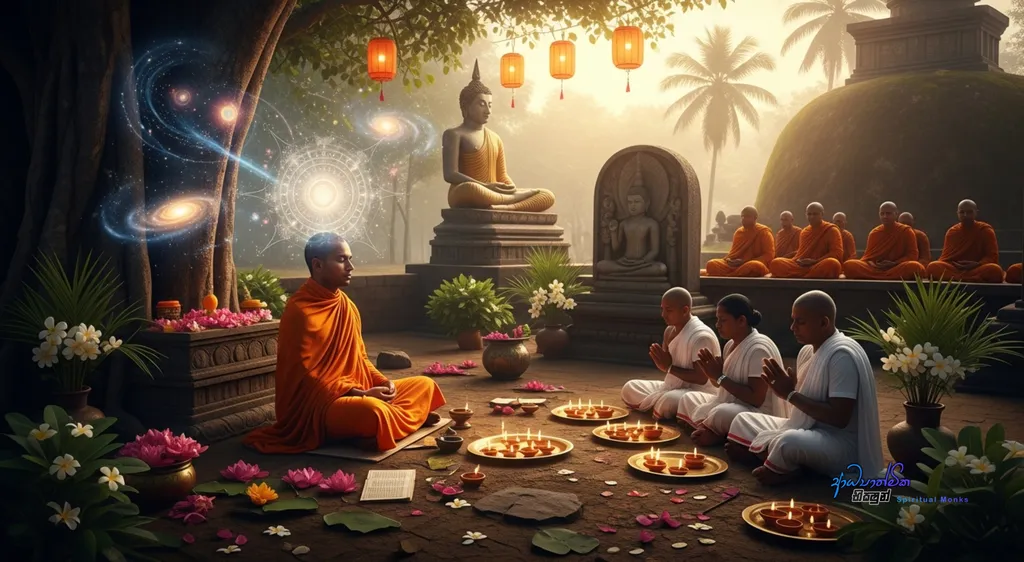
We invite you to walk this path with us. Read our teachings, and most importantly, apply them practically in your own life. as you practice, questions will naturally arise. Please feel free to share your experiences and questions in the comments section below, via email or contact form. I will do my best to offer guidance in future talks based on your progress. For now, begin this practice with an open heart and a mind free from expectation. Cultivate it correctly, and may you find the clarity and peace you seek.
Thank you for joining us. We hope this blog will be of great benefit to your spiritual journey.
May you all be well and happy.
May the blessings of the Triple Gem be with you all!


